
Chinese President Xi Jinping warned US President Donald Trump that mishandling the Taiwan issue could trigger conflicts between the two countries during wide-ranging talks on trade, Iran, and energy security.

India's wholesale price inflation surged to 3.88 per cent in March, marking the fifth consecutive monthly increase, primarily driven by a sharp rise in crude petroleum, natural gas, and manufactured items amidst the West Asia crisis.

A polio vaccination team in Pakistan's Khyber Pakhtunkhwa province came under attack, resulting in injuries to a constable. In a separate incident, polio workers were abducted, highlighting the ongoing challenges in the country's efforts to eradicate polio.

IT major Wipro reported a consolidated net profit of Rs 3,501.8 crore for March quarter FY26, a 1.89 per cent decrease from the previous year, amidst a challenging macroeconomic environment. The company also announced a mega Rs 15,000 crore share repurchase programme.

CThese vulnerabilities, Cert-In said, could leave Apple users at risk of unauthorised access to sensitive data on their devices, cause service disruptions, and compromise the entire device.

Amidst global energy market volatility driven by the West Asia crisis, Russia has proposed increasing its crude oil and natural gas supplies to India, strengthening bilateral energy ties and aiming for USD 100 billion in annual trade by 2030.

Indian benchmark indices Sensex and Nifty rebounded sharply on Monday, driven by a correction in crude oil prices due to ceasefire efforts in West Asia and strong buying in bank stocks.

Reliance Industries' digital arm, Jio Platforms, may see its initial public offering (IPO) delayed to the second half of fiscal 2027, according to CreditSights. The delay is primarily attributed to ongoing geopolitical tensions in the Middle East, which could impact market conditions and investor sentiment.

Iran has blamed the US for disruptions in oil and gas shipping through the Strait of Hormuz, citing 'destabilising actions' as the cause amid the ongoing West Asia conflict and rising energy prices.

Mahindra & Mahindra Ltd reported a significant 48.5 per cent jump in consolidated profit after tax to Rs 5,259.91 crore in the March quarter, primarily attributed to strong performance in its auto and farm sectors, alongside ambitious plans for new SUV and EV launches.

India has refuted claims of payment issues hindering crude oil imports from Iran, clarifying that refiners have the flexibility to source oil from various global suppliers. The Ministry of Petroleum and Natural Gas addressed reports of a tanker rerouting to China, emphasising standard industry practices and secured oil requirements.

India's new manufacturing project announcements more than halved in the fourth quarter of FY26, falling 60 per cent sequentially and 78 per cent year-on-year to approximately 1.7 trillion, driven by global uncertainties, geopolitical conflicts in West Asia, and existing unutilised manufacturing capacity.

India's foreign secretary Vikram Misri on Thursday participated in a high-level meeting hosted by the United Kingdom on the evolving situation in West Asia, underlining concerns over maritime security, energy supply disruptions and the need for diplomatic de-escalation.

Prime Minister Narendra Modi convened the Cabinet Committee on Security to address the impact of the West Asia conflict on Indian citizens, focusing on safeguarding them from the conflict's effects and ensuring the smooth flow of essential supplies.

'Infertility and reproductive health challenges, much like other chronic conditions, are rising globally.'

10 stocks from the Nifty 200 index that offer good growth potential and scope to deliver decent returns from current levels, based on brokerage estimates.

High-level peace talks between the US and Iran, facilitated by Pakistan, aim to de-escalate the conflict in West Asia and potentially reshape regional stability.

'We are targeting a 2.5x to 3x increase in valuation by FY31.'

Indian markets on Dalal Street rallied sharply as easing tensions in the US-Iran conflict and stable oil prices boosted sentiment. Track Nifty 50 and BSE Sensex performance and key global triggers.
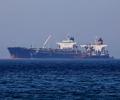
Iranian forces fired upon three commercial vessels in the Strait of Hormuz, with one possibly headed for Gujarat, raising concerns about maritime security in the strategic waterway.
The International Energy Agency (IEA) has proposed immediate demand-side measures, including remote work, lower speed limits, and reduced air travel, to mitigate the impact of a global oil supply shock caused by Middle East disruptions.

Godrej Properties Limited (GPL) reported its highest-ever quarterly profit of 649.5 crore in Q4 FY26, a 70.13 per cent year-on-year increase, driven by record revenues and bookings. The company aims for over 39,000 crore in residential bookings for FY27 and plans to raise up to 3,000 crore through debt securities.

A spokesperson for the Central Khatam al-Anbiya Headquarters said that Iran's armed forces are prepared to intensify their response if aggression continues.

India significantly increased piped natural gas (PNG) connections in March as the government accelerates the expansion of cleaner fuel networks amid global supply disruptions.

INOX Air Products has commissioned a new ultra-high purity liquid oxygen facility in Hosur, Tamil Nadu, to support India's growing semiconductor and solar manufacturing sectors, reducing reliance on imports.

The Indian National Congress has strongly condemned the air strike by Pakistan that hit a hospital in Kabul, Afghanistan, resulting in a high number of casualties. The party calls for global rejection of such acts of barbarism and expresses solidarity with the Afghan people.

The vessels are carrying around 92,600 metric tonnes of LPG and have 33 and 27 Indian seafarers onboard, respectively. Visuals showed Pine Gas crossing the critical chokepoint.

The Trump administration maintains the US is 'not at war' with Iran, despite military engagement reaching a critical legal threshold under the War Powers Resolution, potentially leading to a confrontation with Congress.

Despite significant price differences, Indian farmers are increasingly adopting non-subsidised speciality fertilisers, which are seen as a potential solution to the rising fertiliser subsidy burden exacerbated by global supply shocks.

India summoned the Iranian envoy after two Indian vessels had to reverse course in the Strait of Hormuz following an incident of firing by Iran's Revolutionary Guards.

Egypt, Pakistan, Saudi Arabia and Turkey met in Islamabad in what analysts say is the formal opening of a new diplomatic formation that could reshape the post-war regional order. Their immediate goal is a ceasefire; their larger ambition is to ensure that neither Iran nor Israel emerges from this war in a dominant position. Pakistan's foreign minister then flew directly to Beijing and mooted a Chinese role as guarantor of any eventual agreement. Prem Panicker continues his must read daily blog on the Gulf War.

Analysts predict that the ongoing conflict in West Asia, crude oil price fluctuations, and the US Federal Reserve's interest rate decision will significantly influence the Indian equity market this week.

Former India coach Vimal Kumar urges the Badminton World Federation (BWF) to maintain the current 21-point scoring system, arguing it represents the true essence of badminton. He highlights the sport's global appeal and the disruption caused by frequent changes.

The National Anti-Doping Agency (NADA) Director General Anant Kumar has emphasised the importance of education as the primary defence against doping, acknowledging the evolving nature of the problem and the need for constant upgrades in monitoring mechanisms.

'Travellers are considering safer and more stable destinations.'

A State Bank of India report indicates a sharp increase in precautionary cash holding in India, with the gap between per capita currency in circulation and ATM withdrawals widening significantly, driven by global uncertainties despite record digital payment transactions.

Reserve Bank of India (RBI) Governor Sanjay Malhotra stated that recent regulatory measures to address foreign exchange market volatility, such as capping banks' net open positions, are temporary and aligned with current market conditions, not signalling any structural shift in policy.

'Credit growth in India remains in double digits, even though corporate borrowing is subdued.' 'Corporate credit is weak because companies are cash-rich and cautious amid global uncertainty.'

Reserve Bank of India (RBI) Governor Sanjay Malhotra stated that preventing second-round effects of supply shocks, where inflation expectations rise due to prolonged disruptions, is the primary role of monetary policy. He also defended the RBI's foreign exchange market interventions, asserting it did not commit to an 'indefensible peg'.

'...especially pressure on the rupee, the current account deficit, and foreign exchange outflows.' 'The key question over the next several months is whether the government can prevent external turbulence from feeding into domestic economic pessimism.'
